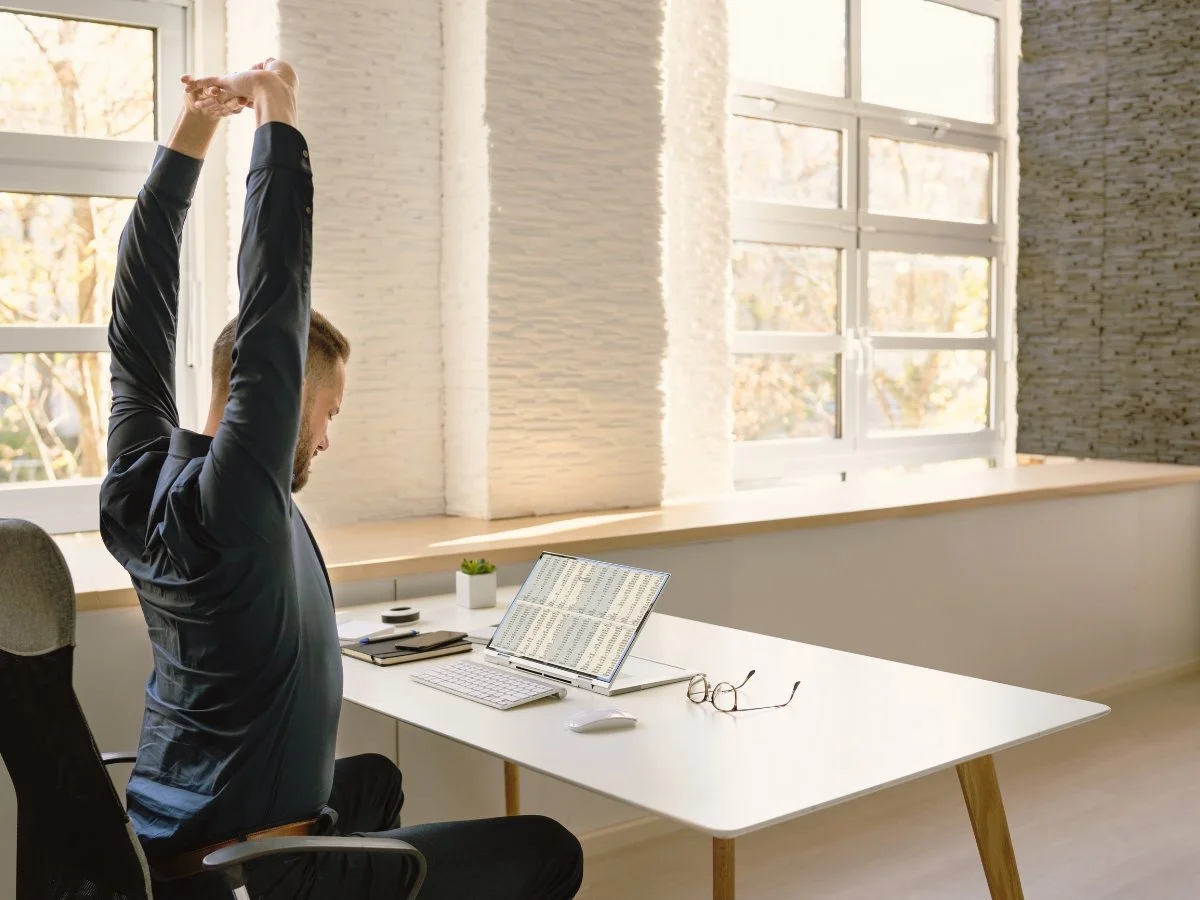
When Desk Tension Starts Affecting Sleep, Headaches, and Recovery
For many people, desk tension does not stay limited to the neck or shoulders.
Over time, long workdays, screen exposure, stress accumulation, repetitive positioning, and reduced movement can gradually begin affecting:
headaches
jaw tension
sleep quality
recovery between workouts
overall energy levels
and the ability to fully relax after the day ends
What starts as occasional tightness or stiffness can slowly become a broader pattern of accumulated tension throughout the body.
At Healcove, we often see these patterns connected to the combined effects of modern routines, prolonged stress, and reduced recovery opportunities over time.
The Body Does Not Separate Stress the Way We Do
Many people mentally separate:
physical tension
emotional stress
screen fatigue
poor sleep
headaches
recovery challenges
But the body often experiences many of these patterns together.
Long periods of concentration, sitting, commuting, multitasking, and sustained mental load can influence:
breathing patterns
muscle tension
jaw positioning
nervous system regulation
recovery capacity
and overall physical comfort throughout the day
This is one reason some people notice:
headaches after long workdays
waking up still feeling tense
difficulty fully relaxing at night
jaw tightness during stressful periods
soreness that feels harder to recover from
The issue is often larger than a single muscle or isolated area.
Why Headaches and Jaw Tension Often Overlap with Desk Work
The neck, jaw, shoulders, ribcage, and upper back all work closely together.
When tension accumulates repeatedly throughout the day, some people begin noticing:
tightness at the base of the skull
jaw clenching or grinding
upper shoulder tension
headaches that worsen later in the day
reduced neck mobility
fatigue behind the eyes
For many people, these patterns build gradually rather than appearing all at once.
This is especially common for people who:
work at a computer for long hours
spend significant time on phones or screens
manage high mental workloads
exercise while also carrying ongoing work stress
stay mentally “on” long after work ends
These patterns often overlap with what many people describe as tech neck and prolonged screen-related tension.
Why Sleep and Recovery Can Also Be Affected
Many people assume recovery simply means:
getting enough sleep
taking a rest day
or stretching occasionally
But recovery is also influenced by whether the body is able to consistently shift out of accumulated tension patterns over time.
Some people notice that:
they feel physically tired but mentally alert
they wake up still feeling tight
their shoulders or jaw remain tense overnight
headaches appear more often during stressful periods
workouts feel harder to recover from
Some people notice changes in recovery between workouts even when they continue exercising consistently.
Modern routines can sometimes create a pattern where the body spends long periods preparing for output without enough opportunity to fully downshift and recover.
Why Temporary Relief Does Not Always Fully Last
Stretching, massage tools, mobility work, and occasional rest can absolutely feel supportive and helpful.
But many people find that tension gradually returns if the broader work and stress patterns remain unchanged.
This does not necessarily mean something is “wrong” with the body.
Often, the body is adapting to repeated inputs over time:
prolonged sitting
sustained concentration
repetitive positioning
stress accumulation
reduced movement variability
limited recovery time between demands
For many people, meaningful recovery involves supporting the broader pattern — not just chasing tension after it becomes more noticeable.
This is why an evidence-informed care approach often looks beyond the area that feels tight alone.
Recovery Support at Healcove
At Healcove, support for desk-related tension patterns is individualized based on how your body is functioning, recovering, and adapting to your daily routines.
Depending on your needs, care may include:
chiropractic care
acupuncture
massage therapy
mobility-focused support
recovery-oriented care approaches
Some people seek care because of recurring headaches or neck tension. Others are looking for support with stress accumulation, movement quality, recovery, or the physical effects of modern work routines.
When desk tension begins affecting headaches, jaw comfort, or neck mobility, it may be part of a larger pattern. Learn more in our guide to headaches, jaw tension, and neck tension in San Diego.
You can also explore our Desk Tension & Recovery in San Diego page to learn more about recovery support for desk workers, active adults, and modern-life tension patterns.
Frequently Asked Questions
Can desk work contribute to headaches?
Yes. Prolonged sitting, screen exposure, neck tension, jaw clenching, and stress accumulation can sometimes overlap with tension headaches and posture-related discomfort.
Why do jaw tension and headaches often happen together?
The jaw, neck, shoulders, and upper back work closely together. Stress accumulation and prolonged tension patterns may contribute to both jaw discomfort and headaches.
Can stress affect physical tension in the body?
Yes. Many people experience physical tension patterns related to stress, concentration, workload, and nervous system activation throughout the day.
Why do I wake up still feeling tense?
Some people remain in prolonged tension patterns even while resting, especially during periods of stress accumulation, long work hours, or reduced recovery time.
What types of care may help with desk-related tension and headaches?
Depending on your needs, support may include chiropractic care, acupuncture, massage therapy, mobility-focused support, and recovery-oriented care approaches.