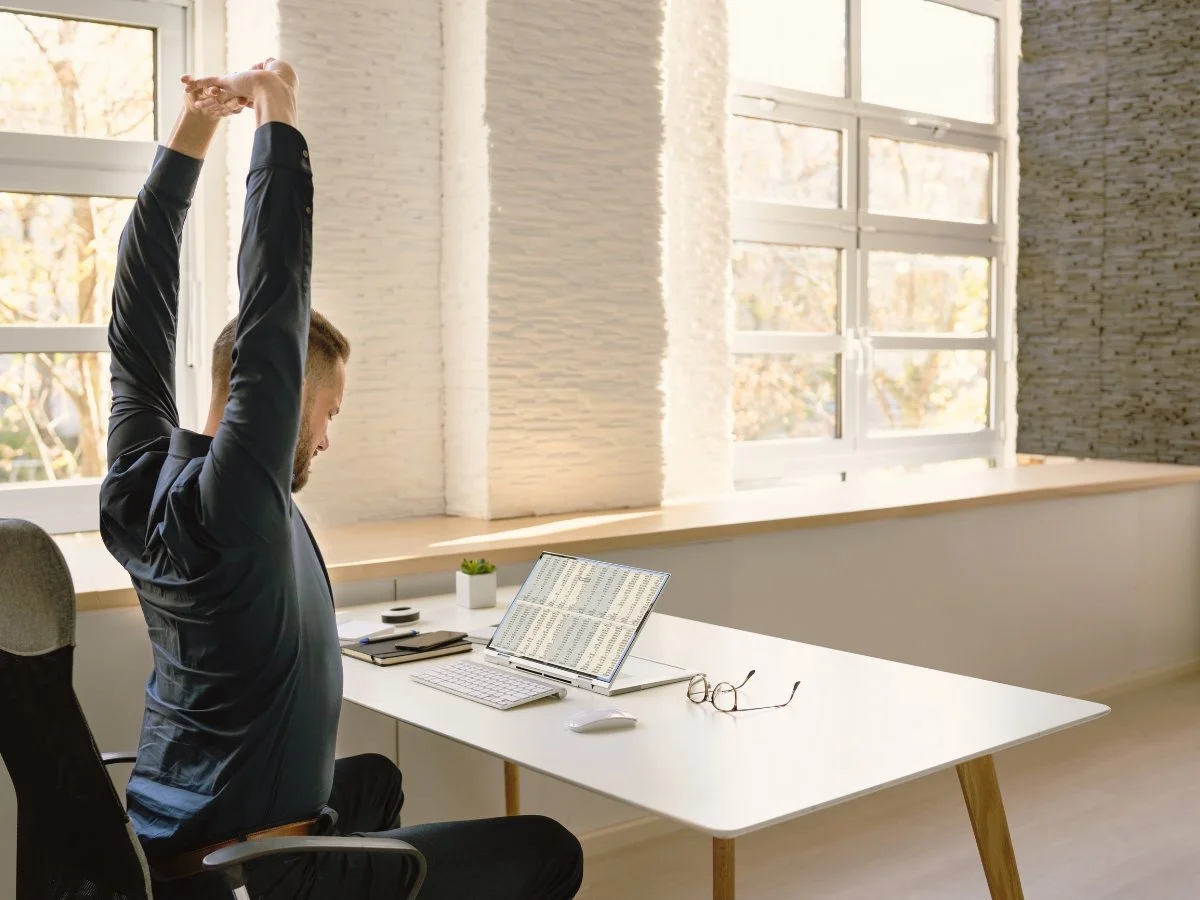
Why Sitting All Day Still Affects Active People
You work out. You stretch. You try to stay active.
So why does your body still feel tight, compressed, or slower to recover after long workdays?
For many active adults, the issue is not a lack of exercise. It is the amount of time spent sitting, driving, working at a computer, and repeating the same positions throughout the day.
At Healcove, we work with many people in San Diego who are physically active but still dealing with accumulated desk tension, neck tightness, headaches, reduced mobility, or recovery fatigue tied to modern work routines.
Exercise Helps — But the Body Still Adapts to Repetition
Movement is one of the best things you can do for your body.
But the body also adapts to what it experiences most consistently.
For many people, that means:
hours at a desk
prolonged screen time
commuting
repetitive sitting positions
stress accumulation throughout the workday
Even if you work out regularly, prolonged sitting can still influence:
neck and shoulder tension
upper back stiffness
hip tightness
jaw clenching
low back discomfort
headaches
reduced movement variability
These patterns often build gradually over time rather than appearing all at once.
Why Active Adults Still Experience Desk Tension
Many active people assume discomfort only happens when something is injured.
But often, the body is simply carrying more accumulated tension and less recovery capacity than before.
You might notice:
workouts feeling harder to recover from
stiffness during workdays
constantly stretching the neck or shoulders
tension returning shortly after temporary relief
feeling physically “compressed” after sitting for long periods
This is common among people balancing:
demanding work schedules
sedentary routines
stress
training
parenting
commuting
and modern-day screen time
The body is adaptable, but it still responds to repeated positioning and sustained tension over time.
Recovery Is More Than Working Out
Exercise supports strength, cardiovascular health, resilience, and mobility.
But recovery also depends on:
movement variability
stress regulation
sleep quality
mobility
nervous system recovery
giving the body opportunities to decompress from repetitive strain
This is one reason many active adults seek support through chiropractic care, acupuncture, massage therapy, or movement-informed recovery approaches — not because they are injured, but because their body no longer feels like it is recovering as efficiently as it used to.
Small Inputs Matter Over Time
The body often responds more predictably to small, consistent inputs than occasional large interventions.
For some people, that may look like:
improving movement throughout the workday
reducing accumulated tension regularly
supporting recovery between workouts
addressing mobility restrictions early
building more sustainable routines around work and movement
Recovery is not always about doing more. Sometimes it is about helping the body carry modern routines more comfortably over time.
This is where preventive care can help active adults support mobility and recovery before tension becomes more disruptive.
Supporting Recovery at Healcove
At Healcove, we support active adults and desk workers in San Diego through chiropractic, acupuncture, massage therapy, and recovery-focused care tailored to how the body is functioning day to day.
Some people come in because of recurring neck tension or headaches. Others are looking to improve mobility, recovery, or how their body feels during long workweeks.
Care is individualized and adjusted over time based on your goals, presentation, and how your body responds — part of our evidence-informed care approach.
You can explore our Desk Tension & Recovery in San Diego page to learn more about recovery support for desk-related tension and sedentary routines.
Frequently Asked Questions
Can sitting all day affect you even if you exercise regularly?
Yes. Exercise is beneficial, but prolonged sitting and repetitive positioning can still contribute to tension, stiffness, reduced mobility, and recovery fatigue over time.
Why do active people still experience neck and back tension?
Many active adults spend large portions of the day sitting, driving, or working at a computer. The body responds to repeated positioning and accumulated stress, even in people who work out consistently.
What are common signs of desk-related tension?
Common signs may include neck tightness, upper back stiffness, headaches, jaw tension, hip tightness, low back discomfort, and feeling physically compressed after long workdays.
What types of care may help with desk tension?
Depending on your needs, support may include chiropractic care, acupuncture, massage therapy, mobility-focused support, or other recovery-oriented approaches.
Does recovery involve more than exercise?
Yes. Recovery may also involve mobility, stress regulation, sleep quality, movement variability, and reducing accumulated tension from repetitive daily routines.